

Categories
- Outdoor toys for toddlers
- garden
- plum play
- kids outdoor water play
- Coronation
- Craft
- CraftACrown
- 8ft trampoline
- Awards
- plum trampoline
- International day of happiness
- the active play specialists
- activities for mindfulness
- mindfulness benefits
- mindfulness for kids
- wellbeing and mindfulness
- what is wellbeing for kids
- christmas gift ideas 2022
- christmas gifts for kids
- gift guide
- autumn
- autumnal
- half-term
- halloween
- activity tables
- Montessori
- nature
- playcentre
- plum play trampolines
- summer
- summer holidays
- sandpit
- sandpit toys
- sandpits
- water play table
- Kids play kitchen
- Play kitchen accessories
- Play kitchen set
- Playing kitchen
- plum play kitchen
- plum play kitchen set
- plum play wooden kitchen
- Wooden play kitchen sets
Recent Posts
- Safe, Fun, and Durable: Best Plum Play Outdoor Toys for Toddlers
- Top-Rated Safe Outdoor Playsets for Children in 2026
- Premium Hand-Crafted Swings and Slides Kids Will Love
- Top Wooden Pretend Play Kitchen for Kids: Plum Play’s Complete Buying Guide
- The Ultimate Trampoline Buying Guide for 2025
- How to Create a Safe & Fun Outdoor Play Space at Home
- Space-Saving Outdoor Toys for Smaller Gardens
- Trampolines vs. Climbing Domes: Which Is Best for Your Child’s Play Style?
- Trampoline SOS: Get Ready For Summer Bouncing
- The Ultimate Egg Hunt
Share
The Ultimate Trampoline Buying Guide for 2025
Trampolines are making a strong comeback as a top garden activity. With the rise in outdoor play trends and a growing awareness of safety, choosing the right trampoline has become more about quality, safety features, and space optimisation than just bounce power.
Whether you're buying your first trampoline or upgrading to a better model, this guide will walk you through everything; from sizes to safety standards, so you can invest in the best trampoline for kids this season.
1. Start by Measuring Your Garden
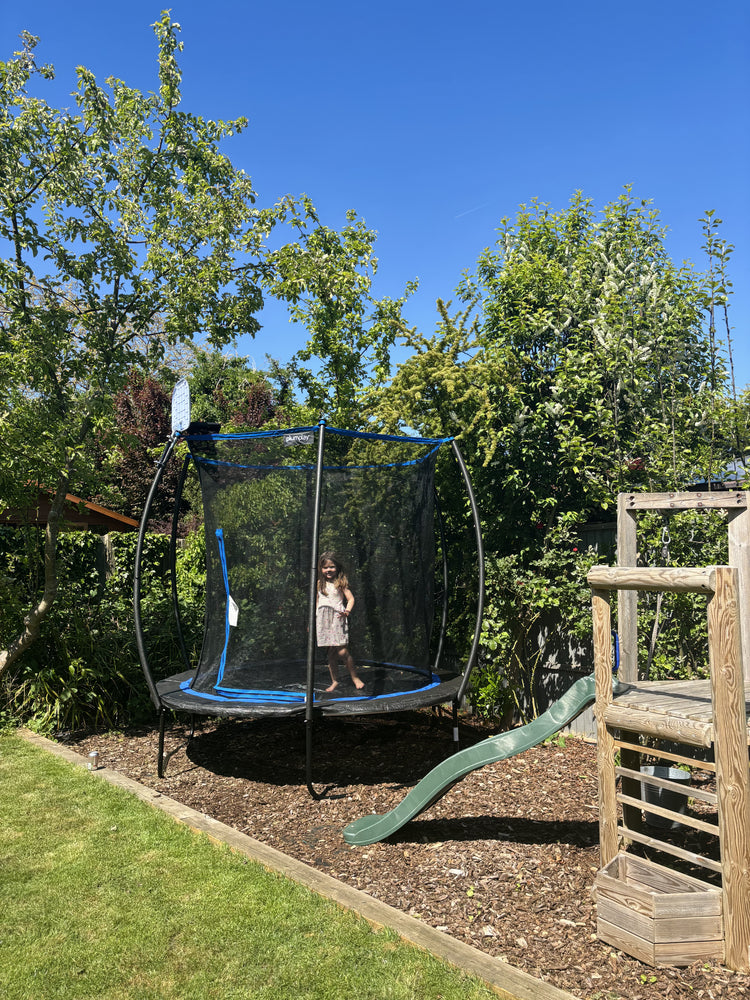
Before diving into product options, measure your outdoor space. Every trampoline requires adequate clearance around and above it. Manufacturers like Plum Play recommend at least 2 metres of clearance around the entire trampoline and a minimum of 6 metres vertical clearance to avoid collisions with tree branches or wires.
For smaller outdoor areas, an outdoor trampoline for small garden configurations such as 6ft or 8ft models are ideal. If your garden allows, a 10ft trampoline with enclosure offers a great balance between bounce space and garden coverage.
2. Choosing the Right Shape
|
Shape |
Bounce Style |
Best For |
|
Round |
Central bounce zone, lower bounce height |
Safer for general child play |
|
Rectangular |
Even tension, higher bounce on all sides |
Gymnastics & older kids |
|
Oval |
Hybrid of round and rectangular |
Shared use with multiple age groups |
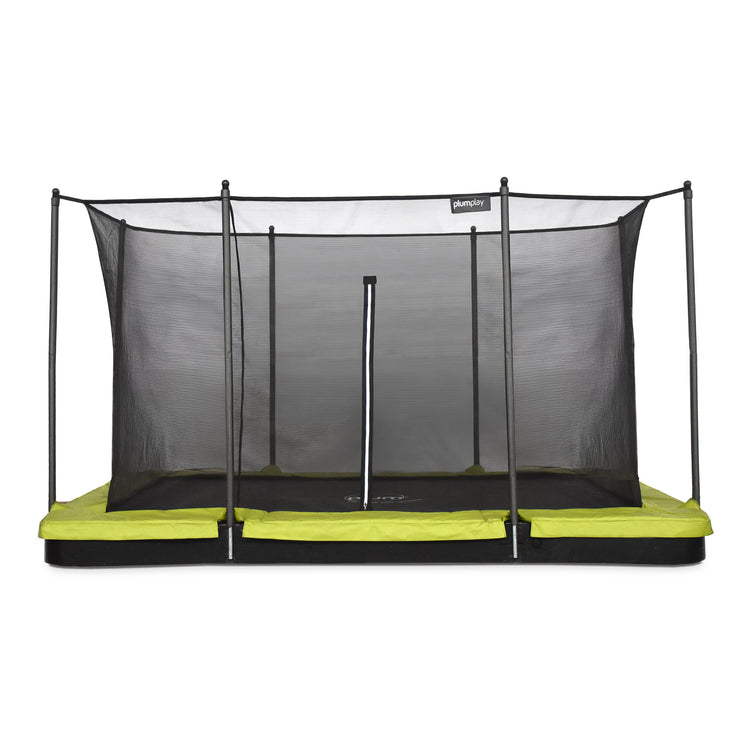
Round garden trampolines are still the most popular due to their soft bounce and self-centering safety. However, if your child enjoys gymnastics or wants a trampoline for skill practice, a rectangular trampoline with enclosure is worth considering.
3. Understand Age Suitability
Not all trampolines suit all age groups. Matching trampoline features with the age and developmental stage of the child ensures both safety and maximum enjoyment.
-
Toddlers (18 months–3 years): Opt for a compact and safe trampoline for toddlers with soft bungee cords instead of springs, low ground height, and padded frames.
-
4–6 years: Look for trampolines labelled suitable as trampoline for 5-year-old UK children. These usually come in smaller sizes with strong safety net enclosures and soft padding.
-
7+ years: Older kids can safely enjoy mid-sized trampolines like a 10ft trampoline with enclosure with appropriate supervision.
Plum Play and other leading brands strictly recommend allowing only one child to jump at a time to prevent mid-air collisions and serious injuries.
4. Prioritise Safety Over Bounce
The trampoline industry has evolved significantly, and most top brands now include essential safety features as standard. If you're searching for trampolines for kids, the following are non-negotiable:
Enclosure Nets: Choose a trampoline with safety net and ladder so children don’t accidentally bounce out or struggle climbing in.
Zipper or Overlapping Closure: Secure entry that closes automatically or locks from the outside.
Spring Padding: Full-coverage pads over springs and frame to prevent pinched fingers or injuries.
Galvanised Steel Frames: Durable, rust-resistant structure built for the British weather.
Stability Anchors: Crucial for areas prone to strong winds or uneven ground.
Even if the trampoline is large enough to fit more than one child, following the one-at-a-time rule significantly lowers injury risks and extends the trampoline's lifespan.
5. Spring or Spring-Free: What’s Better?
Spring Trampolines
Traditional trampolines use steel springs and deliver a high, responsive bounce. They're suitable for older children but should always be well-padded.
Spring-Free Trampolines
Use fibreglass rods or bungee cords underneath the mat for a gentler and safer bounce. These can enhance the longevity of the trampoline, as it relies on less metallic parts.
6. Accessorise Smartly
Accessories can make a trampoline more functional and enjoyable:
Ladders – Helps smaller children safely access the trampoline
Canopy Tops – Create shaded play areas
Basketball Hoops – Adds interactive fun
Covers – Protects the mat from UV and rain damage
No matter what you add, follow the manufacturer's usage guidelines. For instance, even with a basketball hoop, Plum Play still advises one jumper at a time.
7. Trends in Trampolines for 2025
The 2025 trampoline market is more diverse than ever. Here's what’s trending:
Eco-Conscious Builds
Several trampoline brands now feature sustainable materials like recycled steel and low-emission plastics. Great if you're seeking environmentally friendly best trampolines for children.
Space-Saving Designs
Look for modular frames and foldable ladders designed to maximise smaller garden, especially important if you’re buying an outdoor trampoline for small garden setups.
Smart Safety Technology
Some high-end trampolines now offer bounce sensors and companion apps that track time and alert parents if safety zones are breached.
8. What Size Works Best?
|
Size |
Best Use |
Age Group |
|
6ft–8ft |
Safe trampoline for toddlers & small kids |
2–6 years |
|
10ft |
Best trampoline for kids in general use |
5–12 years |
|
12ft+ |
Skill training, teens |
10+ years |
Keep in mind that Plum Play’s trampoline safety policy discourages group bouncing. A bigger trampoline size doesn’t mean that multiple jumpers are allowed at one time.
9. Maintenance and Aftercare
A quality trampoline should last several years. To keep it in top condition:
-
Clean the mat and pads regularly
-
Check bolts, springs, and netting monthly
-
Use protective covers in winter, or ideally dismantle if not being used over the winter months
-
Disassemble or tie down when storms are forecast
Also, supervise use consistently. Kids may try to jump in pairs or perform flips, which increases the chance of injury. Adult supervision is paramount when it comes to safe play.
10. Quick Checklist Before You Buy
-
Measured your space, including vertical clearance
-
Consider your child’s age and weight
-
Safety net is stitched to the bounce mat
-
Foam-covered springs or spring-free
-
Ladder and cover included or purchased separately
-
Warranties of at least 2 years on frame
-
Clear usage guidelines from the manufacturer
-
One-child-at-a-time rule acknowledged and enforced
Final Thoughts
Buying a trampoline isn’t just about picking the bounciest mat; it’s about investing in safe, active play that fits your family and garden. Whether you’re choosing a compact trampoline for 5-year-old UK children or a high-performance rectangular trampoline with enclosure, focus on safety-first features and responsible use.
And remember—Plum Play and other safety-conscious brands strongly emphasise one child jumping at a time, no matter how large or sturdy the trampoline seems.
Prioritise safety now, and your trampoline will offer years of safe, giggling fun all spring and summer long.